


“Nothing stays, all changes,” Lily Briscoe mutters, “but not words, not paint.” Virginia Woolf writes this in her 1927 novel To the Lighthouse, a story centering around the Ramsay family and their visit to the Isle of Skye in Scotland. Their friends and associates accompany them at their vacation home, including the young artist Lily Briscoe. As Lily attempts her painting of Mrs. Ramsay at the beginning of the novel, she appears distressed, combating her own uncertainty and confusion in the messiness of the world surrounding her, failing to relay her emotion onto the canvas. While the first half of the novel establishes permanence and continuity, the second half revokes this idea as time passes, people die, and places change. Lily is the only character who discovers comfort in her discovery of preservation through art; she can create a piece of artwork on a canvas—a type of creation that will not immediately decay in the world around her.
The above paragraph was an intro to my paper on To the Lighthouse for a Modern British Novel class I took in college. I wouldn’t be who I am today without this class, taught by the brilliant Urmila Seshagiri. Since taking it in the fall of 2016, Virginia Woolf has remained one of my favorite authors, and To the Lighthouse my favorite book.
The opening passage—and the remainder of the paper I wrote—introduces and examines the young artist Lily Briscoe, but the rest of the novel's characters are equally fascinating, as they vacation together, fixated on visiting the lighthouse, which they can see from their vacation home.
Throughout the book, the lighthouse serves as a recurring motif. It represents the passage of time, but also represents hope and desire—its physical presence a guiding light for not only ships, but also the characters who can see it from a distance.
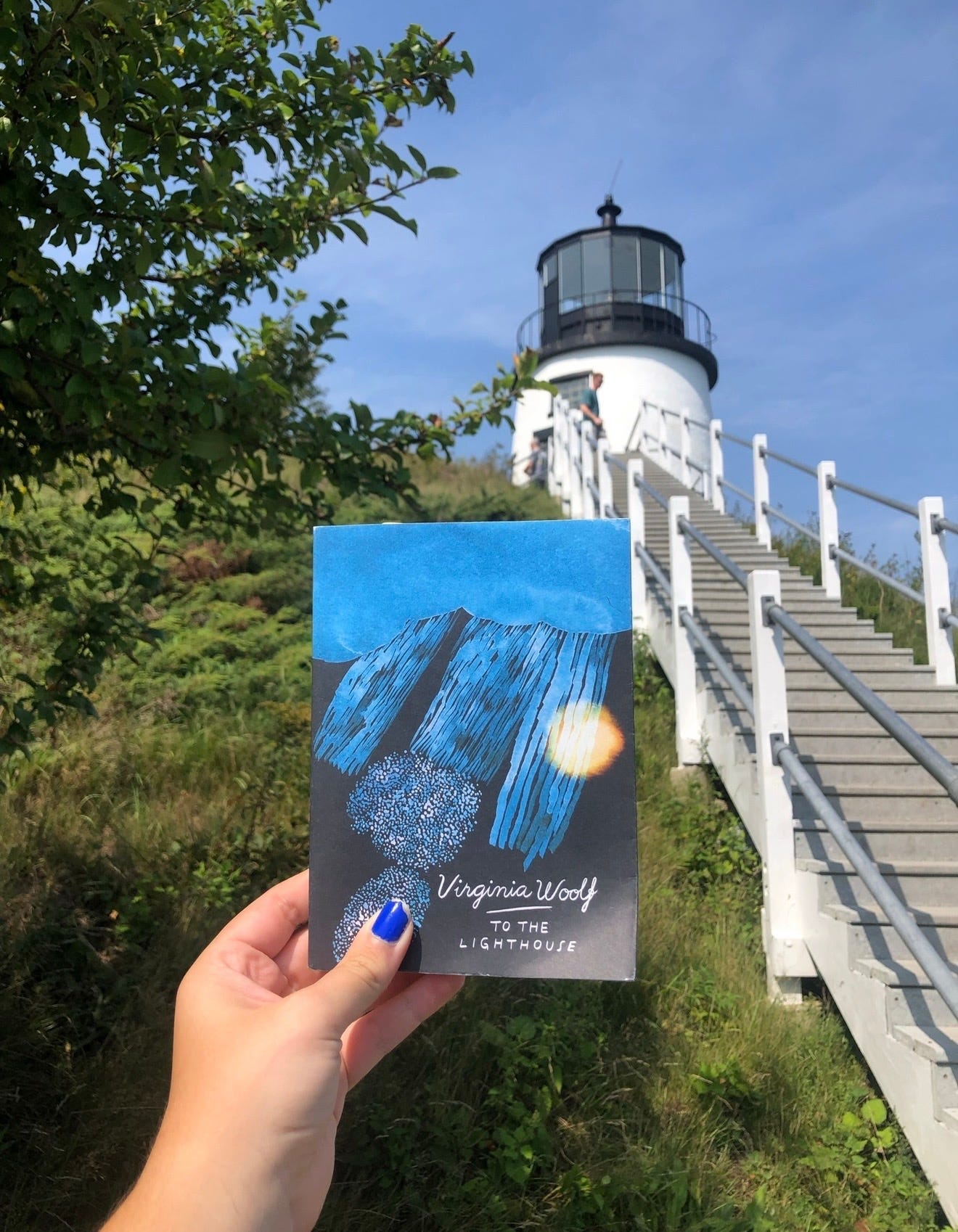
I traveled to Maine for the first time a few summers ago. I didn’t expect to be as in love with the state as I eventually became. I was immediately soothed by everything it had to offer: its inviting sea breeze, bright and beautiful greenery, fresh seafood, and overall soothing atmosphere. I even wrote about my trip for Insider.
Maine is also renowned for its lighthouses, with a total of 65 lighthouses along its coastline. My trip, all those years ago, got me thinking about To the Lighthouse, and lighthouses as symbols, as motifs I had read and re-read in the Virginia Woolf book.
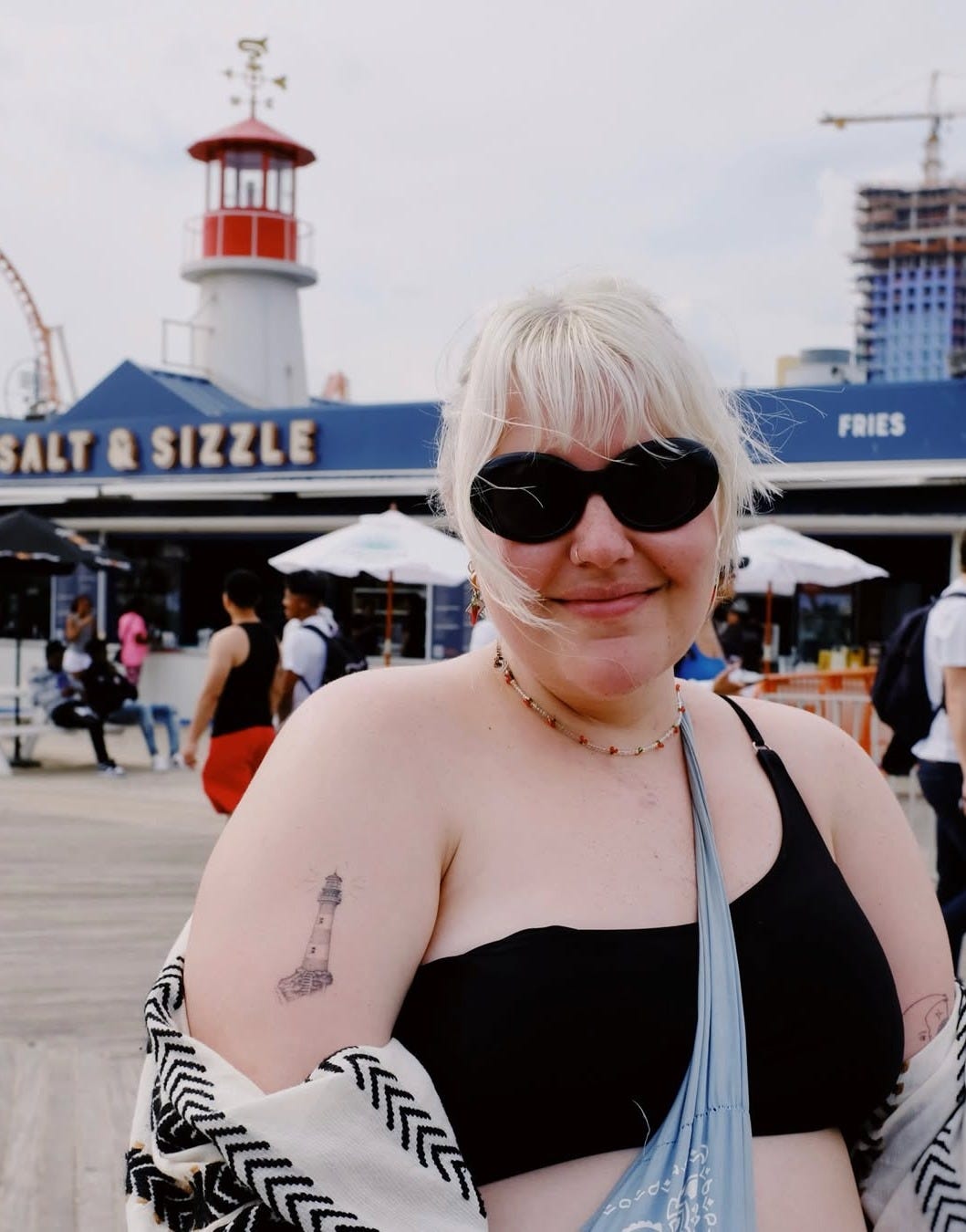
So, you could say I have a lighthouse obsession at this point. I had always planned on getting a lighthouse tattoo because of its symbolism and prevalence in my life, and finally did about a year after that first trip to Maine. Random people on the street have stopped me to ask if the tattoo stands for anything—if it’s based on the Robert Eggers’ Lighthouse movie, which always makes me laugh, and then I go on to explain it’s from a Virginia Woolf novel and typically get blank stares. If I’m lucky, someone gets the reference.
You may be wondering why I’m still going on about lighthouses.
Well, a couple of weeks ago, I ventured back to Maine with my parents and Hamlet, my pug. We vacationed there for a week, driving up the coastline—stopping in Kennebunkport, Portland, and the Booth Bay area. To say it was a breath of fresh air is an understatement: the second we crossed the state line, I was immediately reminded of why I’ve loved this place so dearly. It feels rooted in its nautical nature. Off the side of the road, there are multiple flower stands without anyone working, which abide by the honor system of taking a bouquet and leaving money. Homemade ice cream is as abundant as fresh lobster. Life there is slower and more serene, so it’s no surprise that it’s nicknamed “Vacationland.”


This trip had me reflecting on the title: To the Lighthouse—how the characters are always looking toward it, speaking of visiting it, holding it in their minds. The lighthouse remains a constant presence, especially in the “Time Passes” section, where the slow erosion of time reshapes both the natural world and the people within it. Like the Ramsay family in the novel, I was vacationing in the summer, backing away from my current life and routine to move toward a more serene way of being, even if it was just for a week.
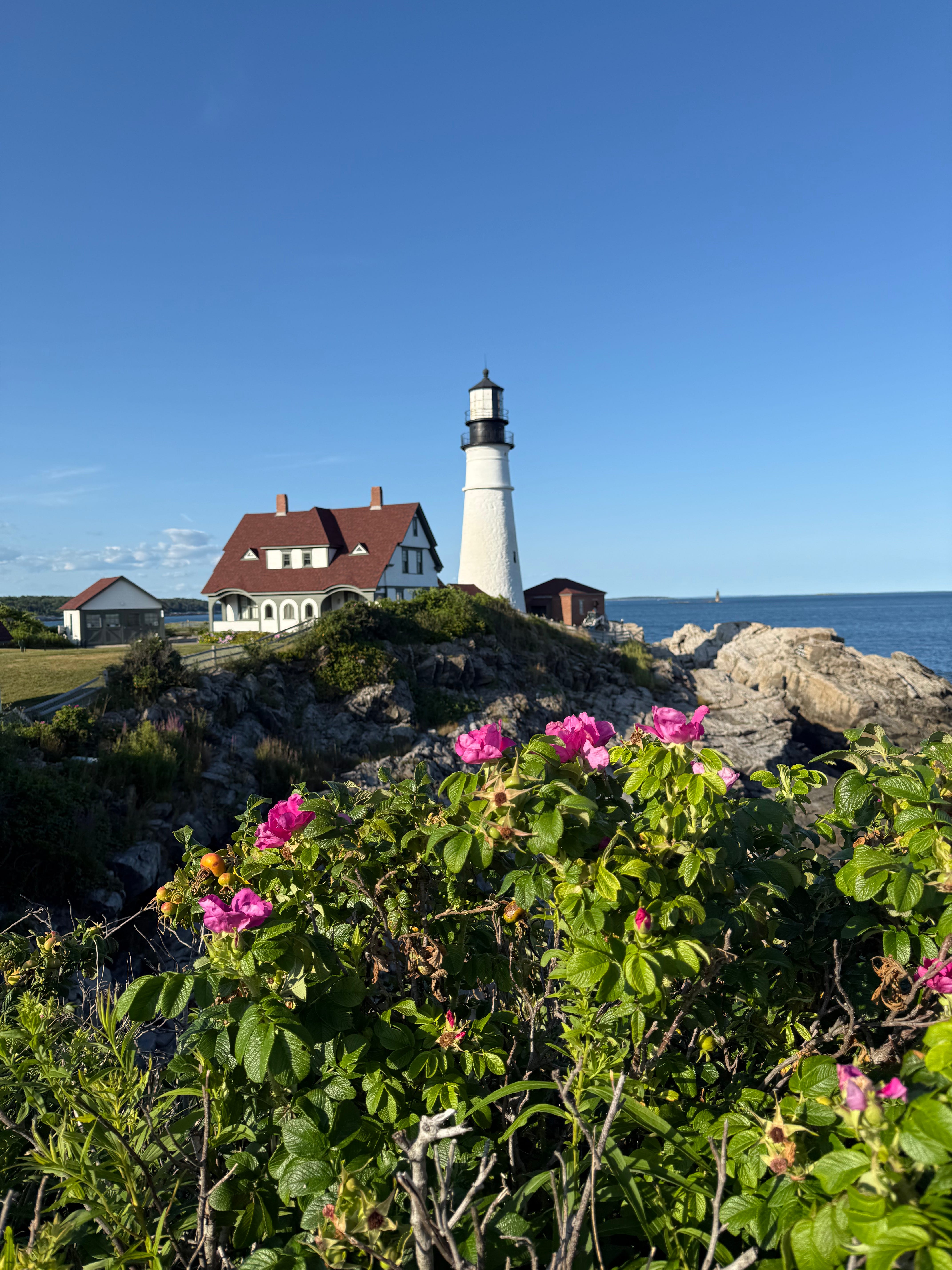
Lighthouses illuminate, guiding us back to shore. As an artist, returning to Maine and revisiting these structures reminded me of the quiet, persistent act of seeking beauty and hope—even in moments when they feel distant or hard to find.
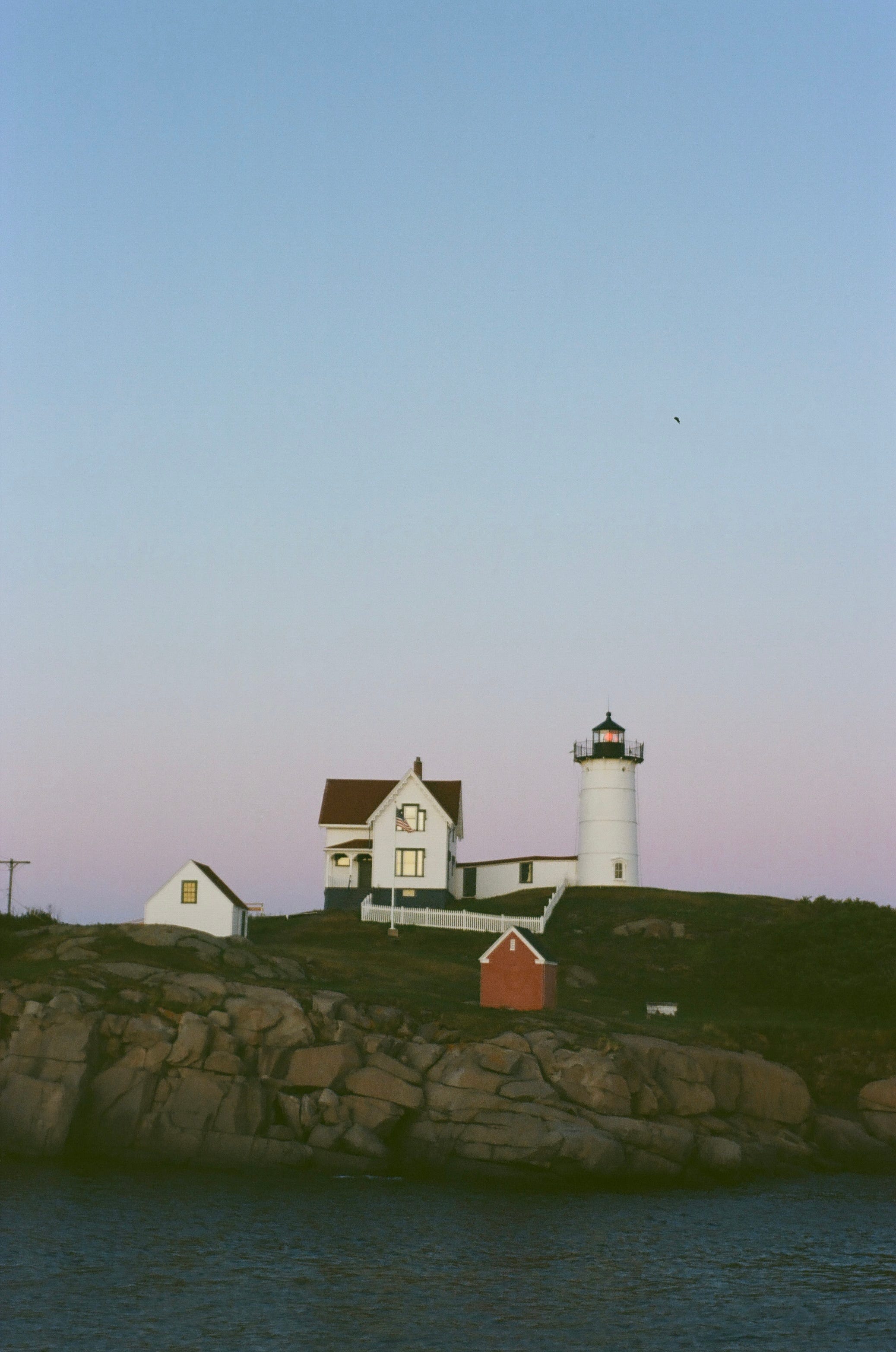
I felt something like what Lily Briscoe must have felt when she finally placed the last stroke on her canvas: a quiet clarity. Throughout To the Lighthouse, Woolf suggests that art is not only a means of understanding the chaos of one’s life, but is also the only way humans can successfully prolong their self-identity in a transient world. In a world that constantly shifts, where people and places never quite stay the same, the lighthouse endures. Just like Woolf’s novel, just like any piece of art that refuses to fade.
Now I see lighthouses not just as symbols, but anchors—for memory, for meaning, for the parts of ourselves we want to keep lit.
The motto of Scripps Howard, the company that owned the newspaper where I spent the majority of my career, was "Give Light and the people will find their own way.” It’s a beautiful image, to be the light in the darkness.